

Introduction
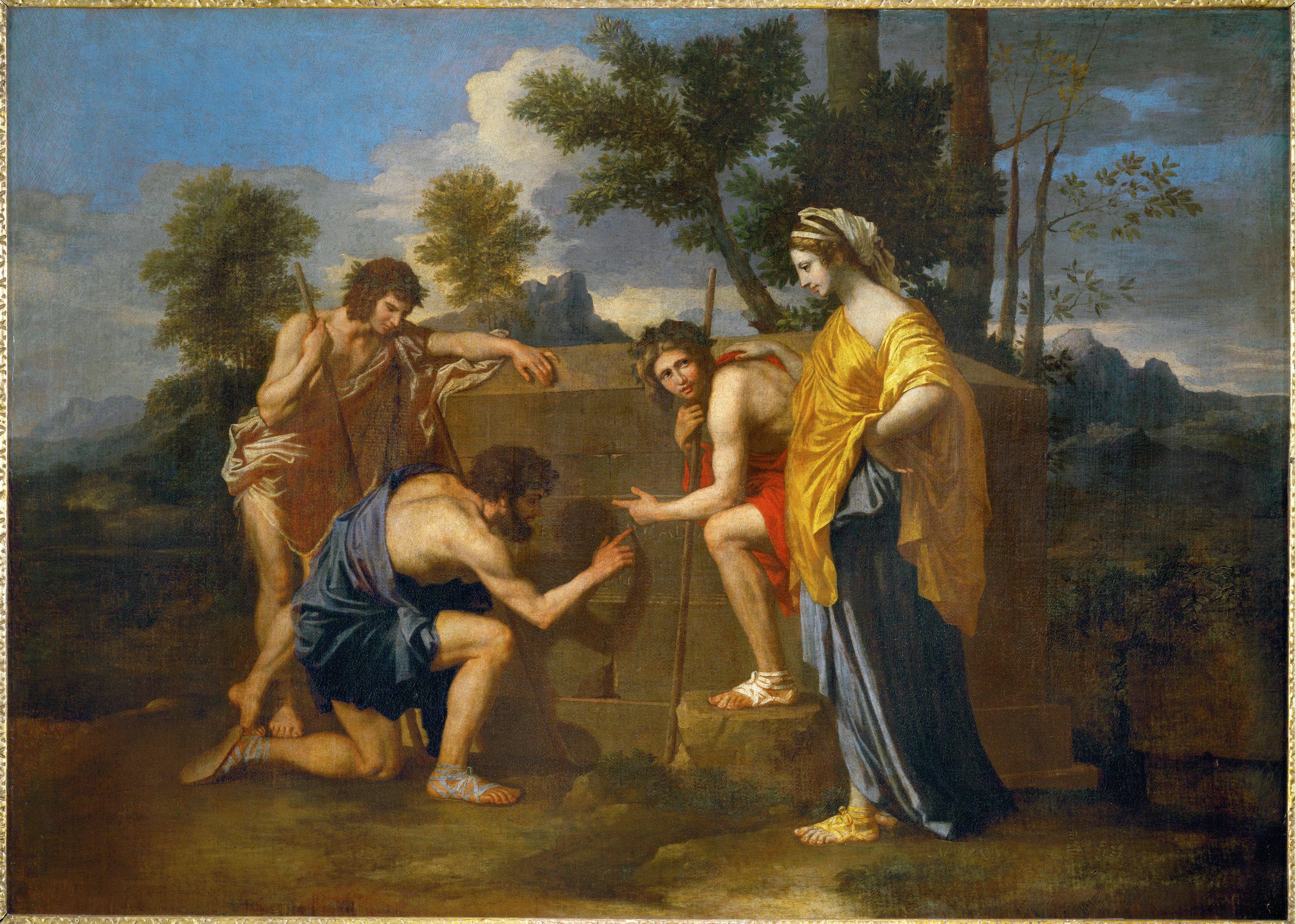
The theme of paradise has long preoccupied European thought. While medieval Christianity located paradise beyond this world, Renaissance humanism revived the classical ideal of Arcadia: a pastoral landscape of harmony between humanity and nature.1
Centuries later, this imagery remains central to the marketing of Mediterranean tourism. Advertisements promise pristine landscapes, authenticity and an escape from the pressures of modern life. But does this European paradise still exist?
The closer one looks, the more this idyllic realm begins to resemble something very different. Behind the postcard scenery lies an economic structure whose long-term consequences receive far less attention than its immediate prosperity. In the twenty-first century, the commercialization of the Arcadian ideal has evolved into a socio-economic monoculture—a Mediterranean variant of the Dutch disease.2
This essay argues that the Mediterranean Trap is not tourism itself, but the structural dependence that emerges when tourism becomes the dominant economic logic of a society, crowding out innovation, reshaping demographic patterns and gradually eroding national resilience.
The Unusual Suspect
Croatia is an unusual suspect because it has never been exclusively Mediterranean. Its geography and historical development have always been shaped by the intersection of Central Europe, Southeastern Europe, and the Adriatic Sea.3 These layers of history, which the Annales School calls the longue durée,4 created a country with political and economic traditions that reach far beyond the Mediterranean world.
Throughout Southern Europe, tourism increasingly drew upon the Arcadian myth of a slower pace of life and harmony with nature. But only a few countries in the Mediterranean embraced this strategy as comprehensively as Croatia.
Unlike Spain and Italy, where mass tourism had already taken off during the post-war Mediterranean tourism boom of the 1950s and 1960s5, Croatia was a relative “latecomer” in tourism; although the Yugoslav era was one of planned and subsidized tourism, it had not yet reached that scale, and following the geopolitical upheavals and the War of Independence in the early 1990s, Croatia’s tourism industry came to a near standstill.6
As a result, Croatia could avoid many of the structural problems that had already occurred in the older Mediterranean tourist economies. This allowed it to elevate the promise of timelessness to an economic dogma. The advertising slogan “The Mediterranean as it once was”7 became the strongest expression of this and commercialized a literary refuge.
Croatia was not necessarily the kind of place one would expect to find an Arcadia. On the contrary, Croatia’s past has been marked by defensive battles on the border between the West and the East. This struggle lasted for centuries. 8
Yet, this historical rupture made the promotion of Croatia as a peaceful Mediterranean destination politically and economically attractive after independence.
The Arcadian myth therefore served not only as a marketing choice, but as an essential post-war survival strategy. The strategy was neither irrational nor accidental.
In reality, tourism was one of the very few economic sectors capable of quickly bringing in much-needed foreign currency.9
At the time, it also perfectly fitted the narrative of the era of hyperglobalism10 in which tourism, services, and international integration were perceived as almost guaranteed roads to prosperity.
Rebranding Croatia as a peaceful Mediterranean destination therefore served both an economic and a political purpose, especially as it allowed the country to present itself as an untouched alternative to its commercialized Mediterranean peers.
The Economic Trap
Croatia’s post-war strategy in tourism proved to be very promising: it brought in foreign currency, created jobs, and was able to improve international visibility.11
This was not necessarily a given, considering the circumstances at that time and the fact that Croatia is geographically more diverse than the Mediterranean campaign suggested. Accordingly, the promotional material first showcased Croatia's diversity through images of coastlines, mountains, and fields, only to later group these distinct landscapes under the slogan “The Mediterranean as it once was.”12
The campaign nevertheless succeeded in reshaping Croatia's international image.13 The beauty of the country and the authentic Mediterranean flair of Istria and Dalmatia, which was also not yet overcrowded, became ever more attractive to tourists.
By the early 2000s, Croatia had regained most of the ground it had lost during the war, and GDP had surpassed its pre-war level and was expanding rapidly (Figure 1).
From this perspective, given the challenges faced at the time, the strategy appeared relatively successful.
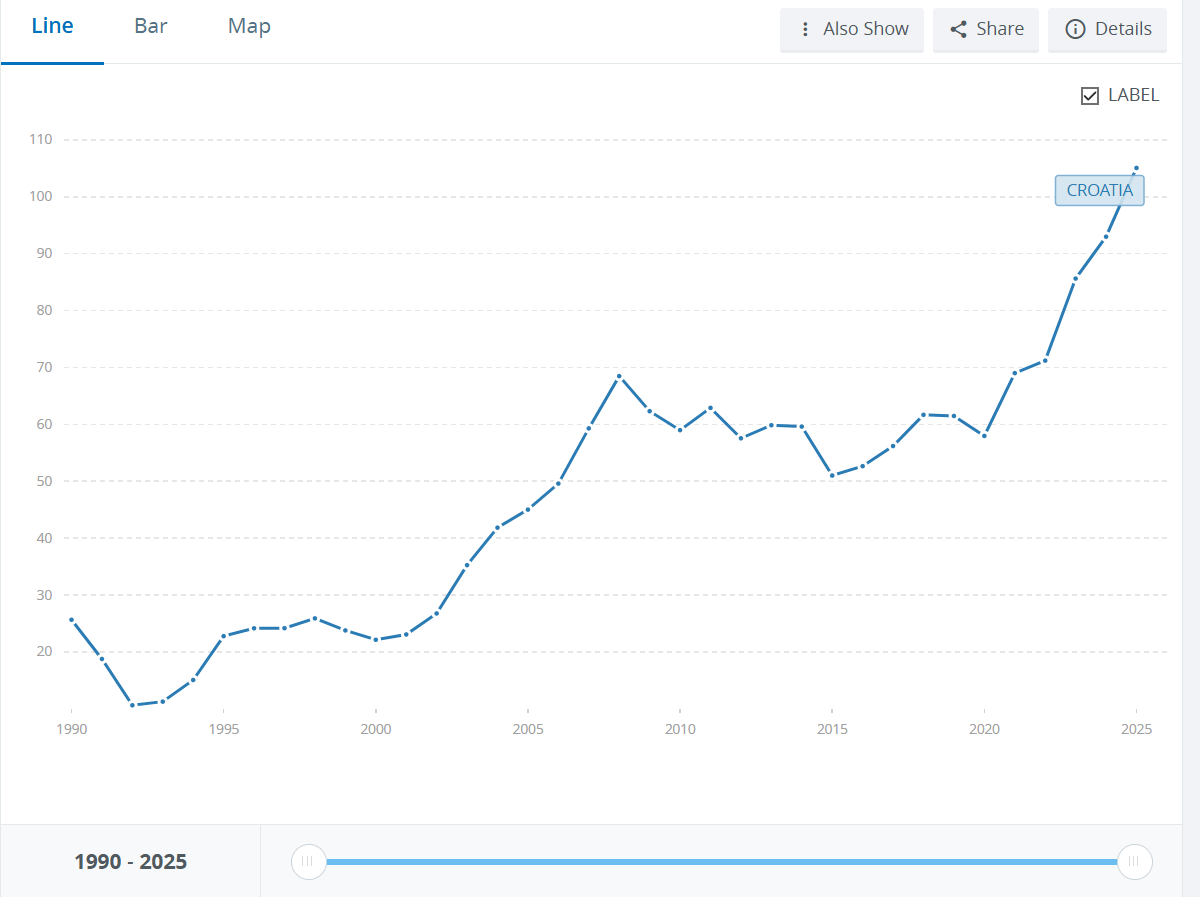
Despite continued growth in tourism, Croatia was hit by the economic crisis in 2008. Croatia’s traditional industrial and export sectors were hit particularly hard, causing the country to slide into a six-year recession.14
Indeed, the 2008 crisis marked a watershed moment, and tourism steadily became the centerpiece of Croatia's recovery strategy.
While this approach generated foreign exchange and sustained economic activity, it failed to deliver typical long-term developmental benefits, despite strong headline figures. As the European Commission notes, Croatia's tourism sector is characterized by high import leakage, pronounced seasonality, and comparatively weak spillover effects on the rest of the economy, limiting its contribution to long-term growth.15
In this context, joining the EU in 2013 coincided with the onset of a more intensive investment wave in an already rapidly growing tourism sector. This led to an unprecedented surge of ‘apartmentization.’ Growing demand for tourism-related real estate, combined with the expansion of short-term rentals, transformed large parts of the Adriatic coast into a yield-oriented property market.16
This marked the culmination of Croatia's growing specialization in tourism, reinforcing a pattern of deindustrialization and expanding dependence on non-tradable sectors.17
What was at first a transitory source of foreign exchange quickly became a permanent monoculture. Eurostat data show that tourism generated 10.5% of Croatia's gross value added in 2022, the highest among all available data for EU member states. Other estimates, which also consider the indirect and induced impacts, place the total contribution of tourism at about one-fifth of Croatia's GDP.
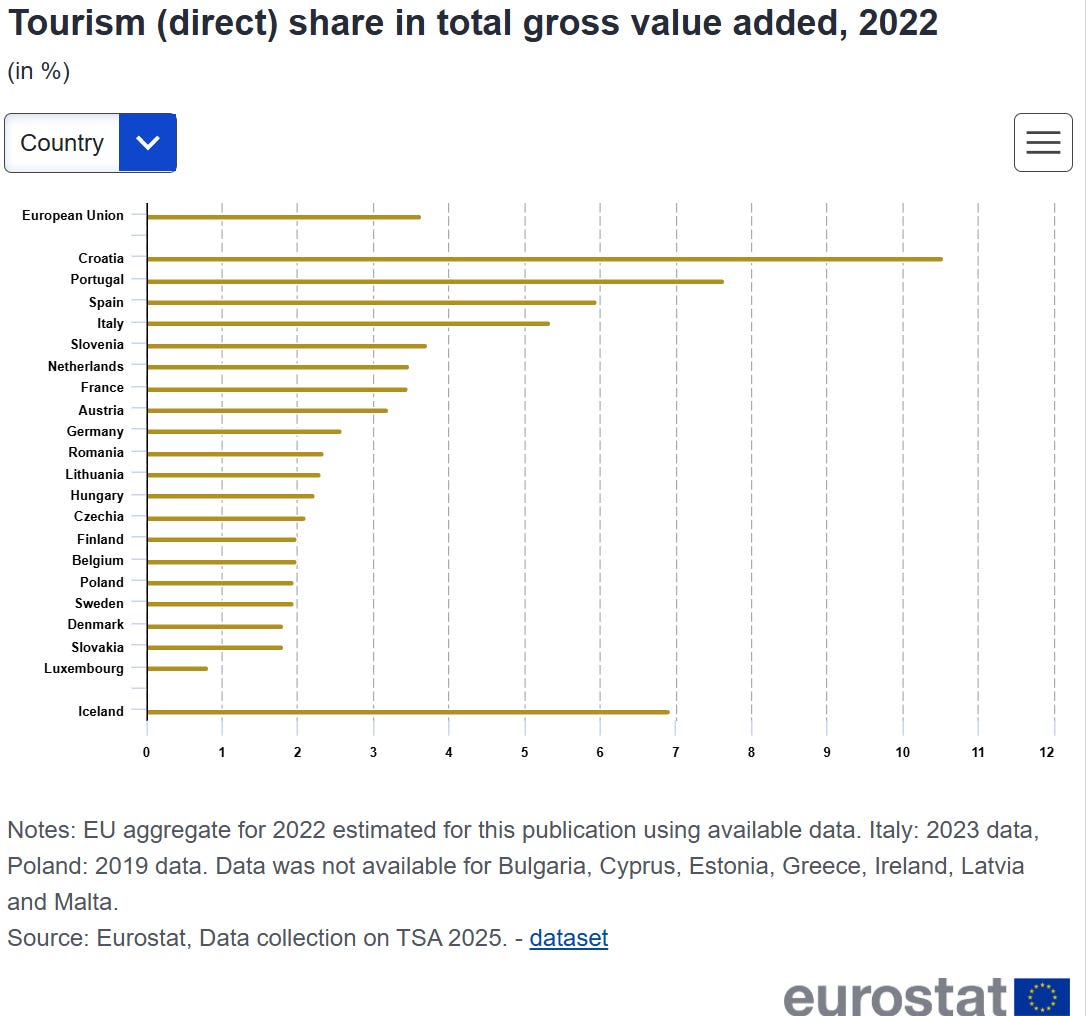
This degree of dependence, combined with the highest level of seasonality in the European Union,18 suggests that Croatia no longer controls tourism; instead, tourism more and more shapes investment patterns, labor allocation and political priorities across the wider economy, bolstering a path-dependent model of development.
But Croatia is not alone in this development. All over Southern Europe, tourism has steadily evolved from an important economic sector into a broader model of growth.19
The main difference is that Croatia's transformation unfolded over a much shorter period.
Whereas Spain, Greece, and Portugal slowly transformed into tourism-driven economies over several decades, much of this structural change occurred in Croatia within a little over a decade following the global financial crisis.
Beyond its effects on growth and sectoral specialization, tourism may also generate broader inflationary pressures. Recent research on Croatia argues that in highly tourism-dependent economies, tourism demand can contribute to inflation through multiple transmission channels, extending its economic effects beyond the tourism sector itself.20
The Demographic Trap
In Mediterranean Europe, demographic decline has become one of the defining structural challenges of the twenty-first century. Low fertility, outward migration and rising housing costs mutually reinforce one another.
These dynamics are especially illustrative in Croatia.
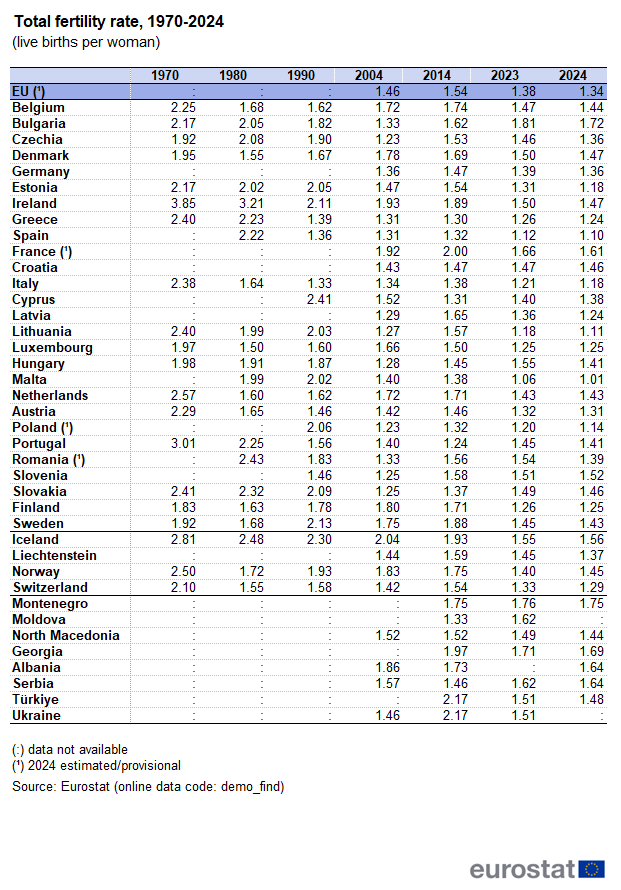
Like most of Europe, Croatia’s fertility rate remains below replacement level. Despite a slight recent increase in births,21 the birth rate remains below 1.5 (Eurostat, 2024), well below the 2.1 needed for generational replacement.
While Croatia is no exception within the broader group of Mediterranean countries, the opposite is actually true regarding the severity of its birth rate: In 2024, its fertility rate (1.46) was the highest among EU Mediterranean states examined here, exceeding Portugal (1.41), Cyprus (1.38), Greece (1.24), Italy (1.18), Spain (1.10), and Malta (1.01), according to Eurostat. Only France remained a notable exception, with a fertility rate of 1.61, reflecting its distinct demographic and economic structure.
Croatia's demographic decline predates tourism and EU accession. But the 2008 financial crisis and the EU's open mobility regime deepened a generalized South-North migratory flow that, besides Croatia,22 impacted Italy, Spain, Portugal, and Greece.23
Moreover, in highly touristed cities along the Southern European coastline, such as Barcelona, Seville, or Lisbon, the practice of converting apartments into holiday rentals has increased the already large gap between local incomes and housing costs. Although historic centers may keep their architectural charm, they are losing permanent residents, local shops, and year-round community life.24
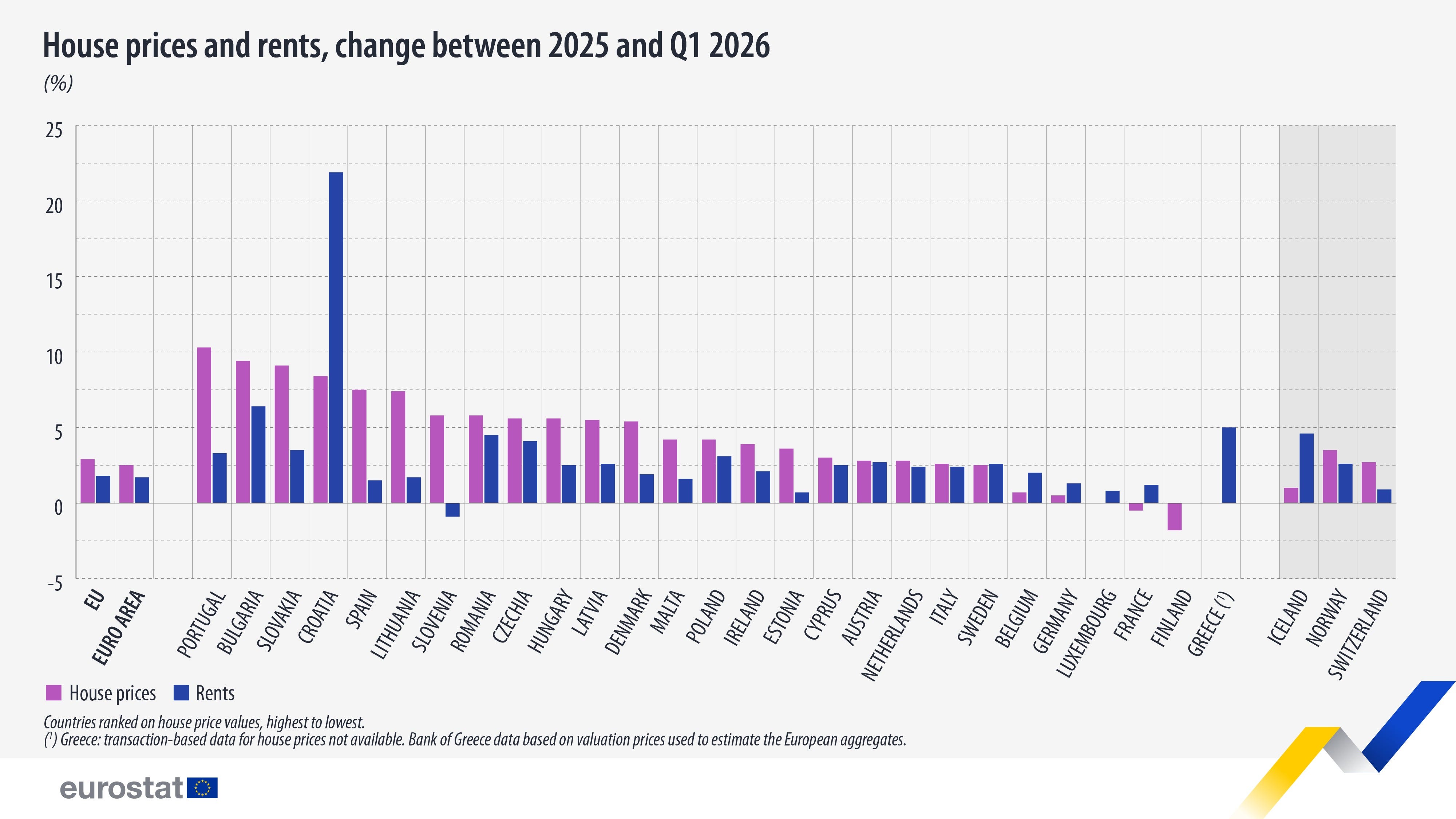
This tension has also manifested itself in housing markets, as recently published Eurostat data indicate. Croatia recorded one of the largest annual increases in house prices and, by far, the highest increase in rents among the countries shown (Figure 4).
Of course, these developments cannot be ascribed to tourism alone. Still, they fit within the overall pressures that arise in housing markets oriented toward tourism.25
But the demographic consequences affect more than just housing.
Indeed, the most recent research points to the fact that tourism leads to an increase in everyday living costs for local residents. Taking a sample of 1.3 billion retail price observations, Kuliš, Mikulić, and Srhoj (2026) find that during the summer season, grocery prices in Croatia's most tourism-exposed coastal municipalities increase significantly relative to those in the inland municipalities, describing this as a tourism-led cost-of-living externality. 26
Such pressures further reduce the attractiveness of remaining in tourism-dependent regions, particularly for younger households and workers outside the tourism sector.
Also, the labor market reveals a related contradiction. Tourism creates income and employment, but a heavily seasonal service economy offers a narrower range of stable, knowledge-intensive career paths than a diversified economy.27
This has led to a labor replacement cycle familiar to Spain and Italy: as young, educated locals emigrate for professional advancement, employers rely more heavily on third-country nationals to fill hospitality and construction roles.28 In Croatia, the number of guest workers has already surpassed 100,300 (according to the Ministry of Interior )29, a massive shift for a country of its size.
Again, this shows a growing divergence between the jobs created in the economy and the opportunities needed to retain the domestic population.
The demographic trap is thus not only a matter of population decline. Instead, it reflects a deepening misalignment between the economic frameworks bolstered by tourism and the demographic stability required for long-term resilience. After all, the challenge is as much structural as it is demographic.
The Strategic Trap
Across Southern Europe, strategic debates are increasingly intersecting with tourism-dependent development models. Coastal regions simultaneously host critical energy infrastructure, ports, naval facilities, and some of Europe’s most important tourism destinations. This means that at the local level, economic development, environmental concerns, and strategic priorities compete for the same geographical space.
A second consequence is what may be described as the visibility dilemma. Tourism-dependent coastal economies derive part of their commercial value from perceptions of tranquility, environmental quality, and visual attractiveness.
Strategic infrastructure, by contrast, require highly visible ports, energy installations, industrial facilities, or military activity. In other words, in developing infrastructure that enhances national resilience and security, governments will be faced with very difficult decisions about trade-offs in preserving the images on which tourism depends.
The LNG terminal on Krk has significantly strengthened regional energy diversification and the North–South Gas Corridor, highlighting the strategic value of critical infrastructure in the Adriatic.30
However, the process of planning and constructing this facility also shows that spatial competition between strategic and tourism-related uses has become one of the most important issues that can only be understood by placing tourism into a wider frame of spatial, environmental, and political constraints instead of being an issue of technical decision-making only.31
The case of Krk illustrates the tension that surrounds strategic infrastructure projects and also how tourism-related dependence leads to a form of strategic vulnerability.
Unlike manufacturing and diversified exporting sectors, tourism is very sensitive to perceptions of safety, stability, and accessibility. This fragility became obvious during the COVID-19 pandemic when mobility restrictions led to the near-total collapse of international tourism, exposing many economies to significant risk due to their dependence on visitor flows.32
Furthermore, other external shocks can negatively affect the perceived safety of a tourist destination. This includes the migratory pressure towards frontline states,33 such as Greece, Italy, and Spain, and increased geopolitical tensions in the Eastern Mediterranean and the Middle East.
Regional instability is a case in point for countries like Greece and Cyprus, which are affected by the negative spillovers of tensions in their neighborhoods, despite the absence of conflict on their own territory.34 Likewise, terrorism, cyberattacks, or disinformation campaigns may generate economic consequences that are disproportionate to their physical impact by discouraging visitors, reducing investor confidence, and triggering official travel warnings.
Thus, a country whose prosperity depends heavily on the voluntary spending of foreign visitors becomes increasingly vulnerable to external political, security, and psychological shocks over which it exercises only limited control. Tourism therefore represents not merely an economic sector but a structural vulnerability. The greater a country’s dependence on maintaining the perception of stability and paradise, the more constrained its strategic autonomy becomes during periods of international crisis.
The strategic consequences of this dependency can lead to a gradual restriction of national sovereignty.
For this reason, the “Mediterranean Trap” extends beyond economics. When national prosperity depends on sustaining an idealized Arcadian image, preserving that image itself becomes a strategic constraint.
Mediterranean Europe
Despite their different historical paths, Southern European countries are exhibiting convergent structural dynamics, such as a growing dependence on tourism, greater stress on housing markets, demographic decline, and ever more challenging economic diversification processes.
Croatia’s trajectory was unusually compressed. Late reconstruction after the war and delayed integration into world markets did not make it exempt from the “Mediterranean Trap”. On the contrary, they accelerated a process that has been much more extended throughout southern Europe.
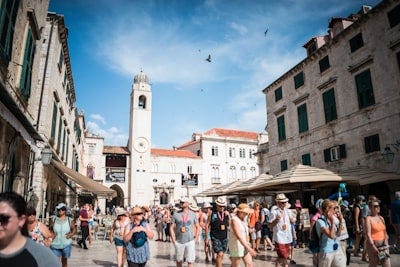
In the popular imagination, historical cities such as Venice and Dubrovnik appear to occupy a geographical and temporal zone seemingly exempt from the pressures of economic and social modernity. The Mediterranean ideal is now symbolized around the world by these two cities.
However, this image is detached from both the historical development and current realities.
MacCannell’s concept of staged authenticity35 is relevant here. Tourism gradually transforms local culture into a performance for external consumption and progressively erodes the authenticity that preceded it. Here, the contradiction inherent in staged authenticity becomes clear: the marketed promise of untouched heritage is replaced by commercial performance. Venice sells a stylized vision of la dolce vita, while Dubrovnik transforms its historic core into a set for Game of Thrones. Though the narratives diverge, the economic logic driving them is precisely the same.
Furthermore, the very success of this image transforms the societies that sustain it. High housing costs, the transformation of living space into tourist accommodation, and the displacement of younger generations all signal an increasing distancing between the Mediterranean as a space marketed globally and the Mediterranean as a lived social reality.
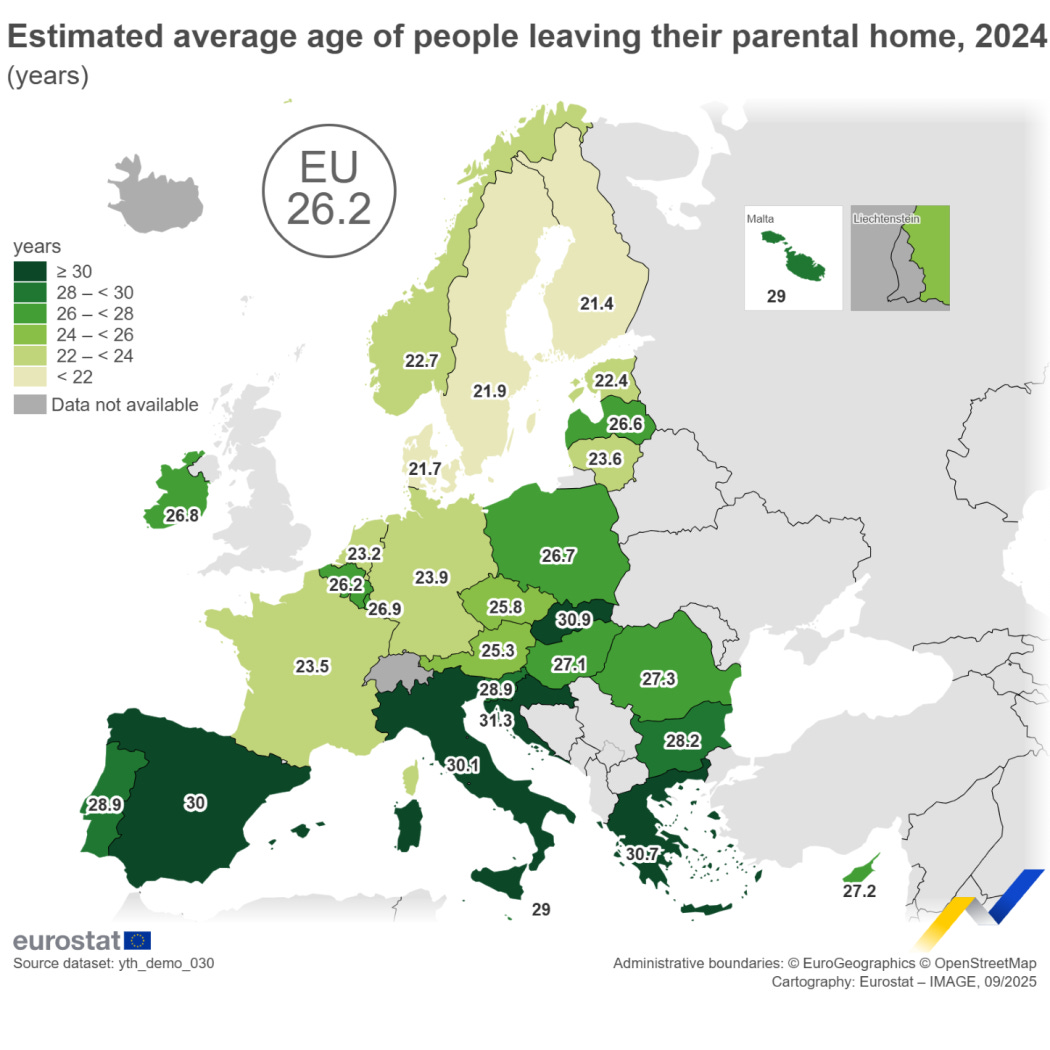
As a consequence, Southern Europe is undergoing demographic shifts caused by minimal birth rates, delayed starts to independent living, and youth migration. Throughout the Mediterranean, young people remain in their family homes longer than the European average because of expensive housing and job insecurity. This postponement of independence diminishes overall fertility rates, particularly as the cost of living continues to climb.
Tourism is clearly not the only explanation for these developments. Nevertheless, an economic model characterized by seasonal employment, rising housing costs and relatively low value-added appears ill-suited to reversing them.
The widening gap is also political. As Javier Carbonell (2025) argues, economic upheavals and precarity are altering the political landscape in Southern Europe. Young men, particularly those without a college education, are gravitating toward the political right. In several European countries, including southern European nations such as Croatia and Portugal, a significant gender voting gap has emerged among voters under 25. Young men are much more likely than young women to support far-right parties.36
Fernand Braudel understood the Mediterranean through its enduring structures and long historical continuities.37 Yet one of the region’s most powerful contemporary continuities may now be the dominance of an economic and cultural model built around the external consumption of Mediterranean space.
This pattern, however, is not geographically inevitable. France, despite possessing a major Mediterranean tourism economy, has not experienced the same degree of structural dependence because tourism remains embedded within a more diversified national economy and a wider network of inland economic centers.
The Mediterranean Trap is not an inevitable geographical destiny. It arises when the Mediterranean image evolves from a mere source of income into the primary organizing principle for economic development, housing, and political decision-making.
The Forgotten Alternative
However, path dependency does not mean a certain outcome is inevitable. It simply means that choosing a different path is more difficult.
Alternative development paths are not unique to Croatia. Northern Italy,38 the Basque Country and Catalonia39 in Spain, demonstrate that Mediterranean economies have long combined tourism with advanced manufacturing, technology and export-oriented industries. These examples suggest that the “Mediterranean Trap” is neither geographically predetermined nor economically unavoidable.
Croatia provides a revealing case because these alternative trajectories emerged alongside a rapidly expanding tourism economy.
One of the clearest examples of an alternative path is Sveta Nedelja. Once a largely agricultural municipality, it has become one of Croatia’s leading technology clusters. The local Rimac Group underlines how investing in knowledge-intensive industries can generate greater innovation- and human capital-based value-added growth than the seasonal tourism model.
Even more impressive is the transformation of the Slavonian city of Osijek. Slavonia, the region in which Osijek is located, was once considered Croatia’s “breadbasket” and relatively wealthy. In recent decades, it has experienced emigration, economic stagnation, and war-related damage that affected Slavonia in particular.
Instead of reviving heavy industry or competing with coastal tourism, Osijek has pursued a different development path. Driven by the Osijek Software City initiative and close cooperation with the local university, the city has emerged as one of Croatia’s leading technology hubs, further reinforced by Jabil’s new production facility in Nemetin.40 By focusing on technology and skilled labour, Osijek has developed a modern comparative advantage.
These examples do not suggest that Croatia should completely abandon tourism but rather continue to diversify economically, as they demonstrate something more fundamental: alternative development paths have existed throughout this post-war transformation.
The country’s geographical diversity produced not only different landscapes, but also different economic models. While the Adriatic became more dependent on tourism, continental Croatia took a path that cultivated resilience through innovation, manufacturing, and technology.
The Croatian case illustrates the broader strategic choice facing tourism-dependent economies: whether tourism remains one pillar of development or evolves into its dominant organizing principle.
Of course, such a model shift implies a much more complex vision of the Croatian state and how it perceives itself, one that integrates the geographical, historical, and human factors besides the technical aspects.
Croatia also possesses assets that many Mediterranean economies lack. One of these is its exceptionally large diaspora (3.2 million)41 in relation to its resident population (3.9 million).42
This global network is perhaps most visible in Croatia’s disproportionate sporting success43, where the diaspora frequently provides elite talent44 and reputational capital that reinforces a strong national brand. But the importance of the diaspora is not only symbolic or demographic; it is also reflected in its continuing economic contribution.
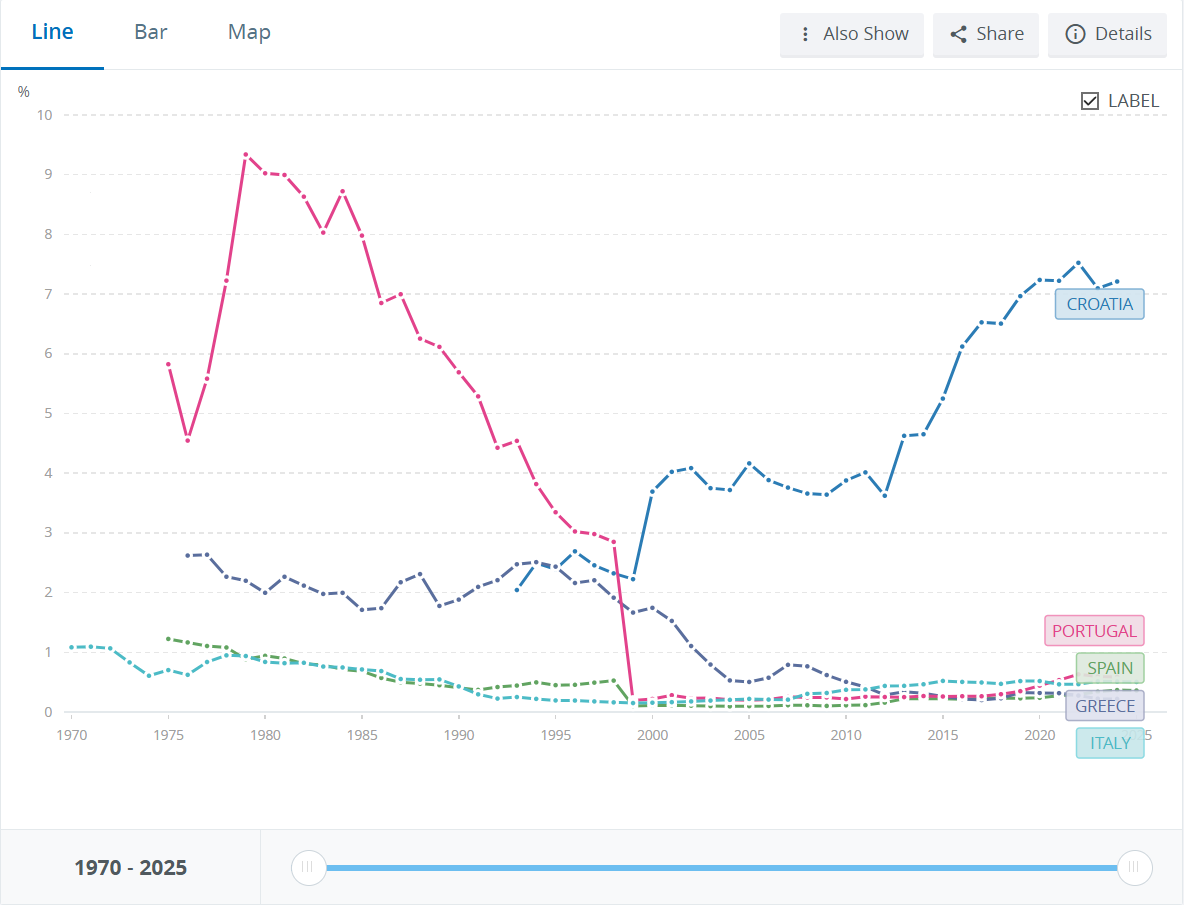
This contribution remains economically significant. In 2024, personal remittances received by Croatia amounted to approximately 7.2 per cent of GDP, compared with less than one per cent in Spain, Italy, Greece and Portugal (Figure 6). This shows that the Croatian diaspora continues to play a far greater economic role than in most Mediterranean economies.
Furthermore, it also highlights Croatia’s continued reliance on income generated abroad more than on productive activity within the domestic economy.
Several Croatian demographers, including Stjepan Šterc, therefore argue that long-term revitalization requires not only demographic policies, but also decentralization and a more systematic integration of Croatia’s diaspora into the country’s economic and institutional development.45
Conclusion
The allure of Arcadia has always been that it offers an escape from history, as a timeless refuge from the demands of progress, conflict, and change.
For decades, Mediterranean Europe, and Croatia in particular, successfully sold this escape to the world. In the immediate post-war era, turning the Adriatic coast into a commercialized paradise was a rational, perhaps even necessary, strategy to generate rapid wealth and rebuild a battered nation. It was a beautiful illusion, and for a brief moment, the reality of uncrowded beaches and slow-paced life almost matched the myth.
But as this essay has argued, the commercialization of paradise carries a steep price. When the logic of the tourist resort becomes the dominant logic of the state, it acts as a quiet, structural anesthetic. It hollows out housing markets, crowds out productive innovation, and drives the youngest and most ambitious citizens into exile, only to replace them with precarious seasonal labor.
Moreover, in an era of renewed geopolitical rivalry, the “Mediterranean Trap” morphs from an economic constraint into a strategic vulnerability. A society that prioritizes the aesthetic expectations of foreign vacationers over critical infrastructure, productive capacity, demographic resilience and the viability of its border regions slowly forfeits its own strategic autonomy.
At least in theory, the choice facing Croatia and its southern European counterparts is not between tourism and industry, but between treating tourism as one component of a diversified economy and allowing it to become the dominant organizing principle of the state. Therefore, the real choice is between substance and scenery.
The technological resurgence of cities such as Osijek, the innovative clusters of continental Croatia, and the diversified industrial economies found elsewhere in Southern Europe demonstrate that alternative development paths remain possible. They show that the region possesses the intellectual, institutional, and industrial capacity to thrive in the twenty-first century.
To escape the “Mediterranean Trap”, it is essential to realize that long-term sovereignty cannot be sustained by rental yields and postcard views.
Arcadia was never meant to become an economic model.
Paradise may attract visitors, but it cannot by itself sustain a nation.
Smarthistory. Nicolas Poussin, Et in Arcadia Ego. https://smarthistory.org/nicolas-poussin-et-in-arcadia-ego/
Tuncay, N., & Özcan, C. C. (2020). The effect of Dutch disease in the tourism sector: The case of Mediterranean countries. Tourism and Hospitality Management, 26(1), 97–114.
Belanger, C. (2025). Croatia. EBSCO Research Starters. https://www.ebsco.com/research-starters/geography-and-cartography/croatia
Braudel, F. (1958). Histoire et sciences sociales: La longue durée. Annales. Économies, Sociétés, Civilisations, 13(4), 725–753.
Manera, C., Segreto, L., & Pohl, M. (2009). Introduction: The Mediterranean as a tourist destination: Past, present, and future of the first mass tourism resort area. In L. Segreto, C. Manera, & M. Pohl (Eds.), Europe at the seaside: The economic history of mass tourism in the Mediterranean (pp. 1–10, specifically pp. 1–9). Berghahn Books.
Currie, D. M., Skare, M., & Loncar, J. (2004, Mai 28–29). The impact of war on tourism: The case of Croatia (Conference presentation). I Conference on Tourism Economics, Palma de Mallorca, Spain
Croatian National Tourist Board. Croatia – The Mediterranean as it once was (promotional film, directed by Zrinko Ogresta, 2006).
Tanner, M. (2010). Croatia: A nation forged in war (3rd ed.). Yale University Press.
Schönfelder, B. (2005). The impact of the war 1991–1995 on the Croatian economy – A contribution to the analysis of war economies (Freiberg Working Papers No. 14). Faculty of Economics and Business Administration, Technische Universität Bergakademie Freiberg [source: 10, 12].
Corry, O. (2012). Hyperglobalism. In Encyclopedia of Global Studies SAGE Publications.
Meler, M., & Ruzic, D. (1996, Oktober 17–18). Marketing identity of the tourist product of the Republic of Croatia (Case Study) [Conference presentation]. 13th International Congress „Hotelska kuca 96“, Opatija, Croatia
Croatian National Tourist Board. (n.d.). Croatia: The Mediterranean as it once was (Image Catalogue).
Hall, D. (2004). Branding and national identity: the case of Central and Eastern Europe. In N. Morgan, A. Pritchard, & R. Pride (Eds.), Destination branding: Creating the unique destination proposition (2nd ed., pp. 111–127, specifically pp. 120–122). Elsevier Butterworth-Heinemann.
World Bank. (2015). Croatia - Restoring macroeconomic stability, competitiveness, and inclusion (Public Expenditure and Institutional Review). https://www.worldbank.org/en/country/croatia/publication/restoring-macroeconomic-stability-competitiveness-and-inclusion
Orsini, K., & Pletikosa, M. (2019). Croatia’s Tourism Industry – Part 2: Curse or Blessing? (Economic Brief 047). European Commission, Directorate-General for Economic and Financial Affairs. Publications Office of the European Union.
Barbić, T. (2024). Impact of tourism activity on urban land and housing market activity: Evidence from Croatia. Economies, 12(12), 337.
Broz, T., & Dubravčić, D. (2011). The Dutch disease in unwonted places – Why has Croatia been infected while Slovenia remains in good health? South-Eastern Europe Journal of Economics, 9(1), 47–66.
Eurostat. (2026, May 26). Seasonality in the tourist accommodation sector. https://ec.europa.eu/eurostat/statistics-explained/SEPDF/cache/7825.pdf?
Bürgisser, R., & Di Carlo, D. (2023). Blessing or Curse? The Rise of Tourism‐Led Growth in Europe's Southern Periphery. Journal of Common Market Studies.
Kožić, I., Sorić, P., & Sever, I. (2024). Assessing the tourism-led inflation hypothesis: An empirical framework. Tourism: An International Interdisciplinary Journal, 72(4), 524–537.
Croatian Bureau of Statistics [DZS]. (2026). Natural change in population in the Republic of Croatia, 2025
Mesarić Žabčić, R. (2021). New wave of emigration from the Republic of Croatia. Croatian Studies Review, 16–17, 87–101.
Lafleur, J.-M., & Stanek, M. (2017). EU Migration and the Economic Crisis: Concepts and Issues. In J.-M. Lafleur & M. Stanek (Hrsg.), South-North Migration of EU Citizens in Times of Crisis (S. 1–14). Springer Open.
Cocola-Gant, A., Gago, A., & Jover, J. (2020). Tourism, gentrification and neighbourhood change: an analytical framework. Reflections from Southern European cities. In J. Oskam (Ed.), The Overtourism Debate. NIMBY, Nuisance, Commodification (121–135). Emerald.
Barbić, T. (2024).
Kuliš, Z., Mikulić, J., & Srhoj, S. (2026). The everyday cost of paradise: Seasonal grocery inflation as a tourism-led externality. Annals of Tourism Research, 118.
Orsini, K., & Pletikosa, M. (2019)
Baldwin-Edwards, M., & Markova, E. (2022). Migration in southern Europe: similarities and differences. Federal Agency for Civic Education (bpb).
Ministarstvo unutarnjih poslova Republike Hrvatske. (2026, January 15). Ministar Božinović: U Hrvatskoj je danas 101.300 stranih radnika [Minister Božinović: Today there are 101,300 foreign workers in Croatia]. https://mup.gov.hr/vijesti/ministar-bozinovic-u-hrvatskoj-je-danas-101-300-stranih-radnika/296177
Török, V. (2022). Experience of the Krk LNG Terminal’s Operation in Croatia Over the Past Year. AARMS, 21(2), 55–68.
Krpan, L., Cvitković, I., Poletan Jugović, T., & Kolanović, I. (2023). Application of Multicriteria Analysis in the Selection of the LNG Terminal Location. Naše More, 70(4), 210–218.
Duro, Juan Antonio; Perez-Laborda, Alejandro; Fernández, Melchor (2022) : Territorial tourism resilience in the COVID-19 summer, Annals of Tourism Research Empirical Insights, ISSN 2666-9579, Elsevier, Amsterdam, Vol. 3, Iss. 1, pp. 1-9
Melotti, Marxiano (2018) "The Mediterranean Refugee Crisis: Heritage, Tourism, and Migration," New England Journal of Public Policy: Vol. 30: Iss. 2, Article 11.
Hazbun, W. (2024). Tourism Challenges in the Eastern Mediterranean: Overtourism, Geopolitical Conflicts and Sustainability. IEMed. Mediterranean Yearbook 2024, 268–272.
MacCannell, D. (1973). Staged authenticity: Arrangements of social space in tourist settings. American Journal of Sociology, 79(3), 589–603.
Carbonell, J. (2025). The gendered far-right vote: Why young European men are turning conservative. European Policy Centre.
Braudel, F. (1996). The Mediterranean and the Mediterranean world in the age of Philip II (S. Reynolds, Trans.). University Press Group. (Original work published 1949).
OECD. (2024). Job creation and local economic development 2024 – Country notes: Italy
OECD. (2024). Job creation and local economic development 2024 – Country notes: Spain
Osijek Software City. (n.d.). About. https://softwarecity.hr/en/about; Jabil. (2025). Jabil opens manufacturing facility in Osijek. https://careers.jabil.com/locations/osijek.html
Official estimate by the Central State Office for Croats Abroad; other estimates suggest a substantially larger Croatian diaspora.
Croatian Bureau of Statistics. (2025). Population estimate of the Republic of Croatia, 2024.
Skoko, B., Gluvačević, D., & Bogdanić, A. (2020). Croatia as a sports brand - Recognition of Croatian sport and athletes among European students. Communication Management Review, 5(1), 6–25.
Bošnjak, M. (2022). Relations of institutions of the Republic of Croatia with Croats abroad with special emphasis on diaspora relations. Hungarian Journal of Minority Studies, 5, 83–93.
Šterc, S. (2023). Hrvatski demografski i migracijski nesklad. Kroatologija, 14(1), 13–32