
Compressed Space, Persistent Rivalry: The Aegean as Europe’s Structural Fault Line
Connectivity without Coherence in the Eastern Mediterranean

Introduction
Geography, history, and politics all shape the Eastern Mediterranean. Yet none of them fundamentally alters its structural conditions. Actors change, alignments shift, and interpretations of the past evolve. But the underlying spatial constraints remain constant, reproducing rivalry across time.
This stands in contrast to Braudel’s1 vision of the Mediterranean as a coherent historical space shaped by exchange and continuity.
Nowhere in Europe is this difference so visible, and nowhere does geography shape the space so intensely as in the Aegean. Islands, coastlines, and narrow sea lanes create a framework in which proximity is inevitable.
Throughout history, various powers have tried to organize this space, ranging from empires to alliances. But despite these efforts, no stable order has emerged.
This sea reveals a deeper reality: geography does not determine outcomes, but it defines the limits within which they can occur.
Geography As Structural Pressure
The defining feature of the Aegean is not only its history, but its geographical configuration.
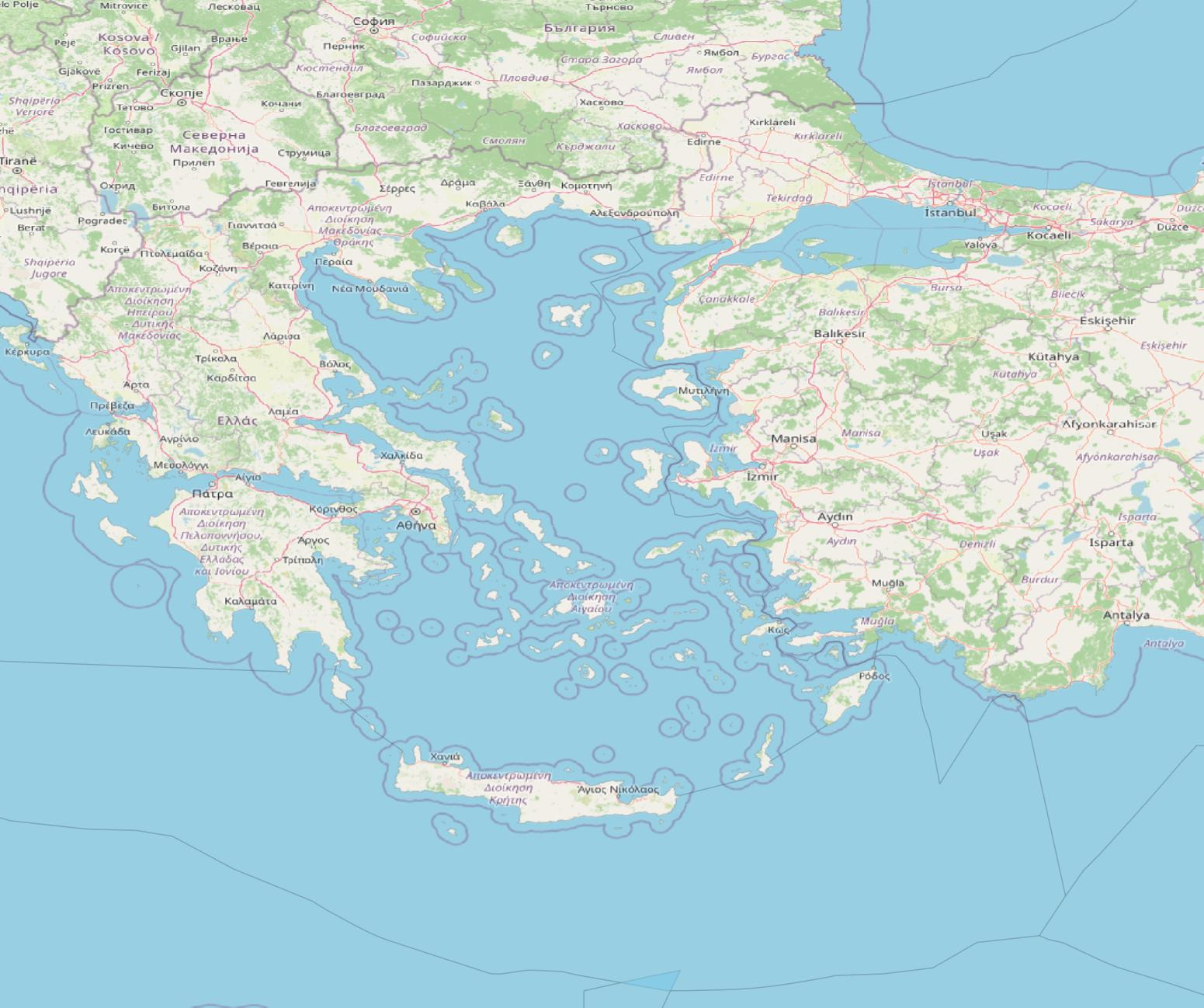
A dense constellation of islands lies in immediate proximity to the Anatolian coast, compressing maritime space to such an extent that distance becomes almost meaningless. There is no clear separation, no strategic depth, and no natural boundary that can stabilize interaction.
This geospatial compression transforms closeness into constant friction. Where distance is absent, interaction cannot be avoided, and where interaction is unavoidable, rivalry becomes constant.
Geography in the Aegean does not dictate specific outcomes. But it imposes structural limits: it prevents stable separation, complicates control, and continuously reproduces zones of overlap.
In such an environment, stability is not the default.
Connectivity Multiplies Friction
If geography creates proximity, modern connectivity intensifies its consequences.
The Aegean Sea is both narrow and tightly connected. Maritime routes and claims over exclusive economic zones transform physical nearness into strategic competition.
This spatial contraction is finalized by modern surveillance and military technology. In a region where drones and high-frequency radar eliminate any strategic 'dead zones,' transparency does not lead to trust, but to a permanent 'greyzone' of conflict.
Beneath open warfare, hybrid tactics become systemic, but technology does not resolve geographical constraints; it detects and escalates every dispute in real time.
Migration, in particular, is a pressure point in this limited space. The proximity of the Greek islands to the Anatolian coast enables strategic control over migration flows and turns geography into a diplomatic lever. The 2016 agreement between the EU and Turkey illustrates how this contested sea forces Europe into a long-term dependence on a transactional regional power.
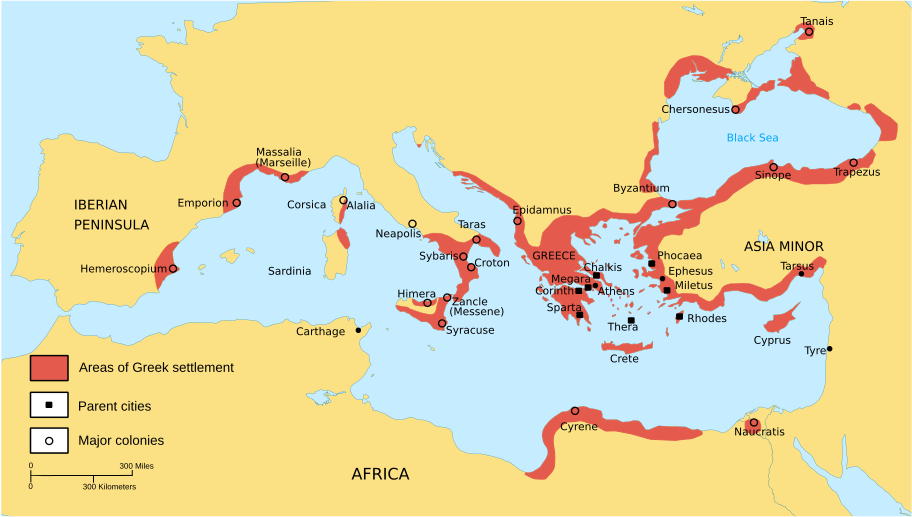
Historical attempts to organize this space (from ancient maritime networks to imperial control) failed because of its physical limitations. Different actors temporarily dominated, but none changed the underlying logic.
Instead of integrating the region, connectivity multiplies points of tension; infrastructure does not dissolve boundaries, it redistributes them. Connectivity doesn’t eliminate competition; it reorganizes it.
Structural Rivalry
The rivalry between Greece and Turkey is often framed in political or historical terms. Yet in the space, it is better understood as a permanent condition than as an occasional dispute.
Geography also reinforces enduring perceptions of vulnerability on both sides. The fear of being surrounded in Turkey, on the one side, and the fear of losing sovereignty in Greece, on the other, make an agreement nearly impossible.
Both states occupy the same maritime space, where coastlines, islands, and competing zones of control make clear separation difficult. This creates a setting in which actions by one side are immediately perceived as restrictions by the other.
Under such conditions, even defensive measures acquire an offensive character. Military presence, territorial claims, and legal interpretations are not simply policy choices, but responses to the same underlying spatial pressures.
This does not eliminate agency, but it limits it. Different governments may pursue different strategies, yet none can fundamentally escape the structural logic of proximity and overlap.
What emerges is not a temporary conflict but a rivalry that is continuously reproduced, regardless of political alignment or external mediation.
In this geographical area, restraint is difficult to signal, and escalation is easy to perceive.
External Powers & Shatterbelt
The structural pressures of the Aegean are further increased by external involvement.
The Eastern Mediterranean resembles what Saul Cohen described as a “shatterbelt”: a region in which internal fragmentation intersects with continuous external intervention. In such spaces, outside powers do not impose order. They become part of the fragmentation itself.
The Aegean and its wider environment are influenced by overlapping interests of actors not restricted to the region. The United States, Russia, and the European Union all operate within it, each pursuing distinct strategic objectives. Their presence does not resolve local rivalries but adds additional layers of competition.
Cyprus represents the shatterbelt logic in its most visible form: a divided space where overlapping claims and external involvement converge. It is not an exception, but a blunt expression of the region’s structural condition.
External engagement reinforces fragmentation rather than resolving it.
The Aegean as a Terminal Fault Line
The absence of a stable order in the region is not the result of insufficient cooperation or failed policy. It reflects structural constraints that no actor has been able to overcome.
Geography prevents clear separation, and no single actor can dominate the region. This makes it impossible for there to be stable hierarchy or equilibrium. Attempts at organization remain partial, temporary, and contingent.
Recurring instability is therefore not a deviation from order, but the normal condition of a space that resists consolidation.
The Aegean is not merely a periphery of Europe; it marks the limits of European coherence.
While the European project is built on integration through law and interdependence, the Aegean exposes a space where these mechanisms reach their limits. Geography does not allow clear separation, but it also prevents full integration.
As a partially occupied EU member state, Cyprus illustrates the collapse of this order. Turkey’s power strategy contradicts the legal definition of the region and presents Europe with an inescapable dilemma. It cannot abandon Greece’s position to uphold its own principles, yet it cannot negotiate away Turkey’s territorial reality either.
In the Aegean, the universalism of the Liberal International Order (LIO) comes into conflict with local particularities. The sea shows that geography and history can create “unsolvable” issues where legal compromise is seen as existential surrender.
The result is neither unity nor stable division, but a condition of permanent tension that must be managed rather than resolved.
The Paradox of Sovereignty
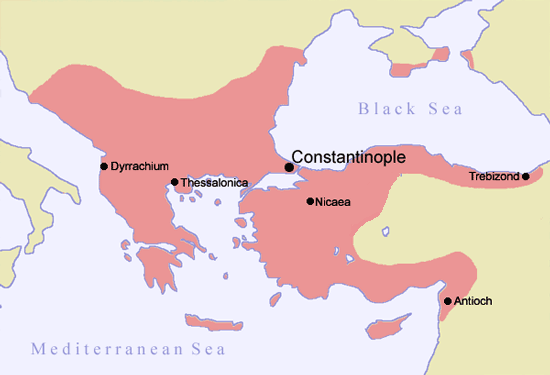
From a historical perspective, the conflict here is between two heirs to a similar imperial legacy. Both Byzantium and the later Ottoman Empire shared a drive for undivided control over this maritime space. This legacy of spatial indivisibility affects modern legal attempts to draw borders through a sea that both nations view as their own.
This deep-seated conception of sovereignty explains why modern diplomatic solutions often fail. It is a conflict between the modern Europe of treaties and an older understanding of space and power that continues to shape both sides of the Aegean.
The current stalemate, therefore, reflects a deeper tension between legal logic and spatial reality.
While Greece emphasizes the continuity of international law and insular sovereignty, Turkey insists on the geographical relevance of the Anatolian mainland. In the Aegean, universal rules encounter a geography that resists their application.
Consequently, the conflict is not simply political or legal, but structural. Neither side can fully yield without undermining its own security logic.
Implications for a Polycentric Europe
The case of the Aegean Sea illustrates that Europe’s strategic architecture is not a monolithic entity, but a mosaic of regional logics. In the Aegean, geography, history, and politics merge into an inseparable structural unity.
Geography clearly imposes an inescapable spatial constraint, making distance impossible. History legitimizes claims to sovereignty, making any division of this space seem like a loss of identity. Politics exploits these conditions, for example, by instrumentalizing migration or exploiting resources, thus transforming physical closeness into permanent strategic tensions.
Within this framework, Turkey acts not as a temporary disruptive factor but as a structural adversary. This rivalry stems from a region that defies universal rules, such as those established by the United Nations Convention on the Law of the Sea (UNCLOS). These rules are based on the premise of clear boundaries, which the geography of the Aegean Sea does not permit.
For a polycentric Europe, this means accepting reality as it is: the Aegean is not a “problem” that can be solved through integration, but a permanent condition that requires strategic management.
Stability does not arise from the absence of conflict here, but through the precise balancing of points of friction.
The Aegean remains the decisive fault line where European idealism regarding legal norms collides with the harsh reality of a region that allows no compromise.
In the future, Europe will define itself not through uniformity but through its ability to permanently moderate such inherently unstable regional systems without being shattered by them.
References & Selected Reading
Fernand Braudel– The Mediterranean and the Mediterranean World in the Age of Philip II
Saul Bernard Cohen– Geography and Politics in a World Divided
Ziya Önis– Greek-Turkish Relations and the European Union: A Critical Perspective
Geoffrey Till – Seapower: A Guide for the Twenty-First Century
Nicholas J. Spykman– The Geography of the Peace
C.M. Woodhouse – Modern Greece: A Short History
Here, the fundamental contradiction to Fernand Braudel’s vision of Mediterranean cohesion becomes apparent. The example of Cyprus makes it clear that maritime geography does not necessarily have an integrating effect, but moreover acts as a magnifying glass for successive ruptures. The island’s turbulent history—from its Byzantine-Greek roots through Arab raids, Venetian fortification, and Ottoman conquest to British colonial rule and the current division—demonstrates that the region does not foster unity. Instead, historical layers are not fused but preserved in a permanent state of fragmentation. Cyprus is thus not the connecting link of a Mediterranean world, but the embodiment of a terminal fault line.